Every sock yarn guide on the internet tells you cotton is breathable and merino is warm. True, and useless when you are staring at a spec sheet trying to decide whether combed cotton is worth the premium, whether bamboo claims survive the wash cycle, and what a yarn swap does to your unit price. This guide is written from the buying side of a factory's yarn warehouse: what each fiber actually costs you, how blends behave in production, and where the batch-to-batch traps are.
Quick answer: combed cotton is worth it for anything touching skin at retail — the extra process removes short fibers, which is what pilling is. Merino earns its price in thermal programs only; blended into everyday lines it mostly buys a story. Bamboo viscose delivers softness and moisture management but check the anti-bacterial claim against wash-test data, not marketing. Recycled polyester (GRS-certified) is now cost-neutral against virgin in most counts. And the blend ratio matters as much as the fiber: the industry-default 80/15/5 cotton build exists because every point you move changes hand-feel, durability, and price at once.
Combed vs Carded Cotton: The Pilling Decision
Carded cotton keeps its short fibers. Combing removes them — roughly 15-20% of the fiber mass is combed out, which is why combed yarn costs more per kilogram and why it behaves differently after ten washes. Those short fibers are what pills: tiny nubs of broken fiber that knot on the fabric surface. On a crew sock worn daily, carded cotton shows visible pilling at the heel and toe within weeks; combed holds its surface dramatically longer.
The buying translation: combed for anything sold at retail with your brand on it, carded acceptable for promotional and industrial programs where the sock is a giveaway, not a product. When a factory quotes you "cotton" with no qualifier, ask which — the price gap between the two is real and quoting silence usually means carded.
Merino: Where It Earns Its Price and Where It Doesn't
Merino wool at 19.5 micron or finer gives thermal regulation, odor control, and next-to-skin softness that cotton cannot match — in hiking, ski, and outdoor programs it is not a premium, it is the requirement. But merino in an everyday crew sock is mostly a marketing line: the microclimate of an office sock never engages what merino does well, and you pay a fiber premium plus a knitting premium (fine merino needs gentler machine settings, slower runs).
Practical note from production: merino blends at 30-40% with nylon outerkeep most of the thermal benefit and double the durability — 100% merino socks wear out at the heel long before they stop smelling fine. If a supplier quotes 100% merino for daily wear, they are selling fiber, not socks.
Bamboo: Read the Claim, Then Read the Wash Test
Bamboo viscose is genuinely soft and genuinely good at moisture transfer. The claims that need checking are anti-bacterial and "eco." Anti-bacterial performance in bamboo comes from processed viscose behavior — it fades with washing unless the finish is re-applied, so ask for wash-test data at 20 and 50 cycles, not the fiber brochure. On sustainability, bamboo as a plant is fast-growing; bamboo as viscose involves chemical processing, and buyers making green claims in the EU should be careful with both directions of that story.
In blends — typically 60-70% bamboo with polyester and elastane — it makes excellent studio and lounge socks: the softness sells, and the durability gap against cotton is covered by the blend. Our yoga grip programs run bamboo-body options for exactly this reason.
Recycled Polyester: The Cost-Neutral Sustainability Choice
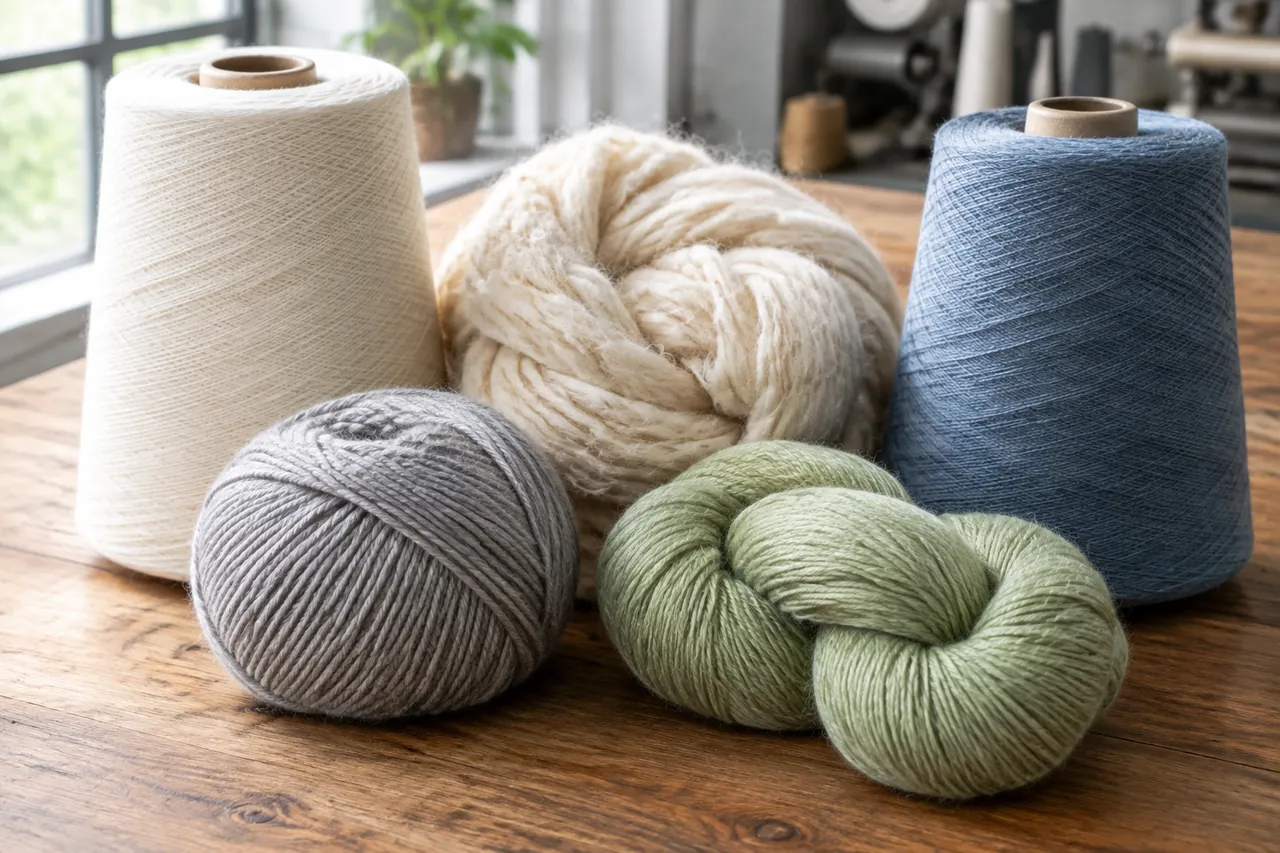
Two years ago rPET commanded a premium. At most counts it no longer does — GRS-certified recycled polyester prices within a few percent of virgin, and for brands that need a sustainability line without a price story, it is the cheapest credible claim available. Verify the certificate chain (GRS scope covers the recycling stage; transaction certificates cover your actual batches) — we covered how certification scopes actually work in the certifications guide.
The Blend Ratio Is the Spec: 80/15/5 and Its Neighbors
The default athletic and everyday build — 80% cotton, 15% polyester or nylon, 5% elastane — is not tradition, it is engineering equilibrium. The cotton carries comfort, the synthetic carries durability and shrinkage control, the elastane carries recovery. Move one point and you trade: 85/10/5 feels more natural and pills faster; 75/20/5 lasts longer and feels slicker. The full mechanics of why this ratio dominates retail programs deserve their own page — we break down each percentage's job in our cotton blends explainer.
Batch, Dye Lot, and the Color You Approved
Yarn is bought in lots and dyed in vats. Two lots of the "same" navy from the same mill can sit half a shade apart — invisible on a Pantone card, obvious when two production runs of the same SKU sit side by side on a shelf. Factories manage this with lab dips and a light box approval before each bulk dyeing; as a buyer, your protection is approving the lab dip against a physical standard, not a screen. If a factory skips the dip and promises "same as last time," that is the exact moment a customer-return batch is born.
How a Yarn Swap Moves Your Quote
Because yarn is 40-55% of ex-factory cost (see our cost breakdown), fiber changes are the biggest lever on price — bigger than packaging, bigger than pattern complexity. Rough ordering from affordable upward: carded cotton, combed cotton, rPET blends, bamboo viscose, merino. When you compare quotes between factories, confirm the fiber grade first; a 12% cheaper quote on "the same sock" is very often carded where you approved combed.
FAQ
Is combed cotton worth the extra cost? For retail products, yes — combing removes the short fibers that cause pilling, which is the number-one quality complaint on cotton socks. For promotional giveaways, carded is a legitimate saving.
Do bamboo socks really stay anti-bacterial? The property fades with washing unless the finish is engineered to hold. Ask for wash-test data at 20-50 cycles. Softness and moisture management, however, are inherent to the fiber and do not wash out.
What blend should a starter program use? The industry default 80/15/5 (cotton/poly/elastane) is the safe engineering choice — comfort, durability, and recovery balanced at a proven price. See our cotton blends explainer for what each percentage contributes.
Does recycled polyester cost more than virgin? At most counts, GRS-certified rPET now prices within a few percent of virgin polyester — it is the most cost-neutral sustainability claim available. Verify GRS scope and transaction certificates cover your actual batches.